
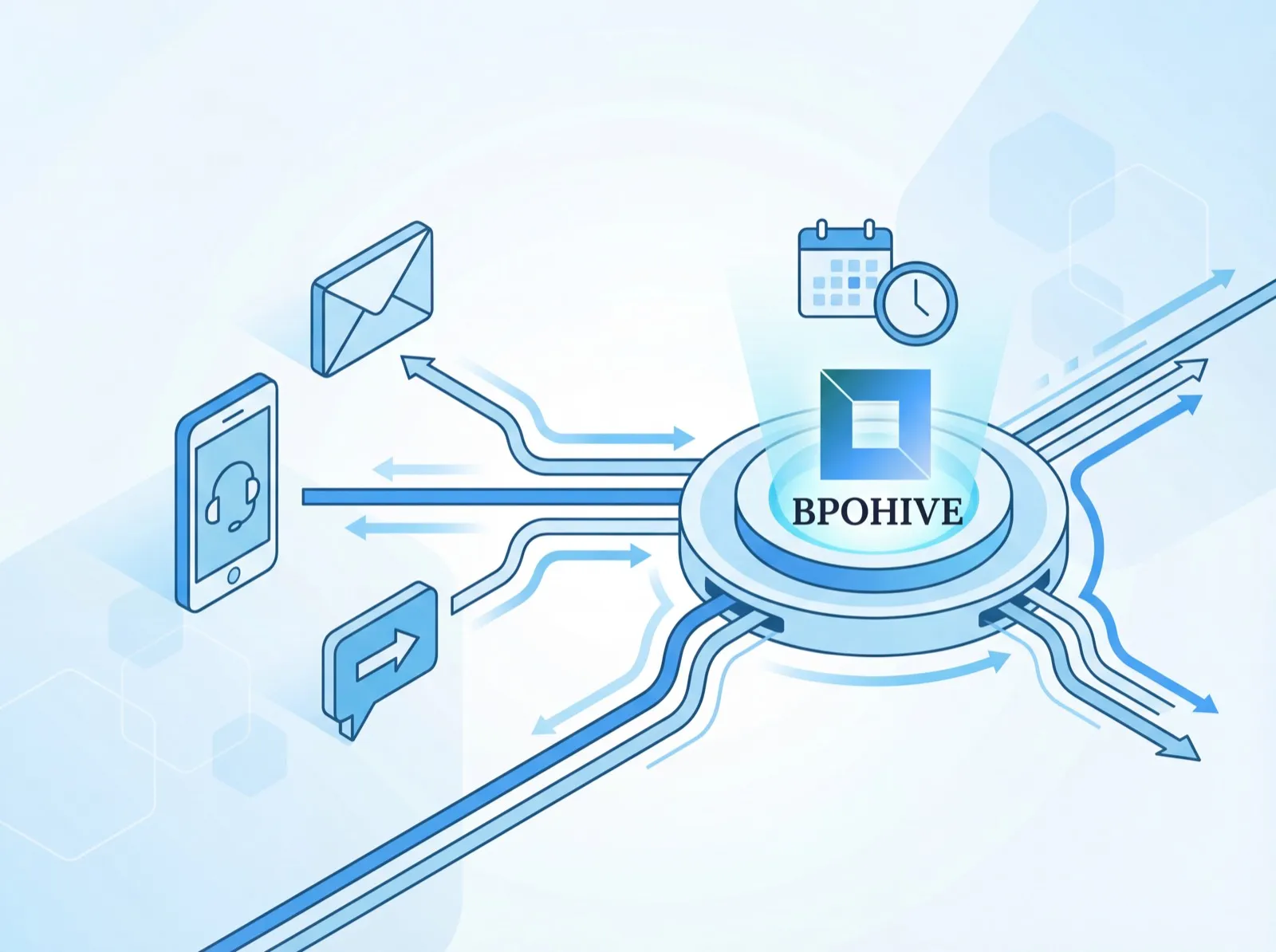
B2B appointment-setting services in the USA help companies identify the right accounts, reach decision-makers, qualify genuine interest, and place sales-ready meetings directly on the calendar. The best programs do more than make calls: they combine research, phone outreach, email, LinkedIn, follow-up, qualification, confirmation, reporting, and continuous improvement.
The short answer
If your closers are spending too much time prospecting, or your pipeline changes wildly from month to month, an outsourced appointment-setting team can build the top of the funnel while your salespeople focus on discovery, proposals, and closing. The goal is not the highest number of meetings. It is a repeatable flow of meetings with accounts that match your ideal customer profile.
What B2B appointment-setting services actually include
A professional appointment-setting program sits between marketing and sales. It takes a defined market, creates conversations with the right people, and hands qualified opportunities to your closing team.
A complete service normally includes:
- Ideal customer profile refinement: defining industries, company sizes, territories, technologies, triggers, and buyer roles.
- Account and contact research: building and validating lists instead of relying on broad, unqualified databases.
- Messaging and offer development: translating your value proposition into a reason for a prospect to take a meeting.
- Phone-led outreach: creating real conversations, handling objections, and learning why the market responds, or does not.
- Email and LinkedIn support: warming prospects, adding credibility, and following up across channels.
- Qualification and booking: confirming fit, need, authority, timing, and the agreed meeting criteria before scheduling.
- Confirmation and handoff: sending calendar invitations, reminders, context, and notes to improve show rates and sales readiness.
- Reporting and optimization: tracking what is happening at every stage and improving segments, scripts, and cadences.
That is the difference between a managed outbound program and hiring someone simply to dial a list.
Why US companies outsource appointment setting
Building an internal SDR function requires hiring, training, management, data, dialers, email infrastructure, CRM processes, quality assurance, and enough activity to learn what works. If any piece is missing, expensive salespeople often end up doing their own prospecting, or waiting for inbound leads.
Outsourcing can make sense when a company wants to:
- enter the US market without building an entire outbound department first;
- give account executives more time to sell and close;
- test a new industry, territory, or offer before scaling;
- add capacity without a long internal recruiting and training cycle;
- replace disconnected tools and freelancers with one accountable operating process;
- get structured feedback from real conversations with the market.
| Area | Building in-house | Managed outsourced team |
|---|---|---|
| Hiring | You recruit and onboard each SDR. | The provider supplies and manages the delivery team. |
| Systems | You assemble data, calling, email, CRM, and reporting. | The operating workflow is built into the engagement. |
| Management | Your leaders coach activity and review calls. | Campaign management and QA are included. |
| Testing | Learning can depend on one or two new hires. | Segments and messaging can be tested through a structured campaign. |
| Best fit | Teams ready to invest in a permanent internal department. | Teams that need speed, flexibility, or specialist execution. |
How the BPO Hive ACES system runs a campaign
BPO Hive uses the ACES system: Analyze, Craft, Execute, and Scale. It gives every campaign a clear path from understanding the market to expanding what has been validated. The process is designed to generate qualified meetings while also producing useful market intelligence.
1. Analyze
We begin by understanding exactly who you are, what you sell, who your customer is, and what your ideal prospect looks like. We ask detailed questions about your offer, ideal customer profile, decision-makers, audience size, previous outreach, average deal value, sales cycle, market experience, capacity, proof points, and the type of opportunity your sales team can convert.
This phase gives us the facts needed to avoid broad targeting and generic messaging. By the end of it, both teams should understand which accounts matter, which people within those accounts matter, and what must be true for a meeting to be valuable.
2. Craft the Strategy
We turn the analysis into a practical game plan. Together, we decide which ICP segments to test, how the value proposition should be presented, which objections to prepare for, what qualifies a prospect, how the channels will support one another, and how many touchpoints the validation phase should include.
For example, a BPO Hive Validation Sprint may begin with 10,000 touchpoints. A touchpoint is one outbound call, email, LinkedIn connection request, or LinkedIn message. The exact volume and channel mix are scoped around the campaign rather than treated as a universal formula.
3. Execute
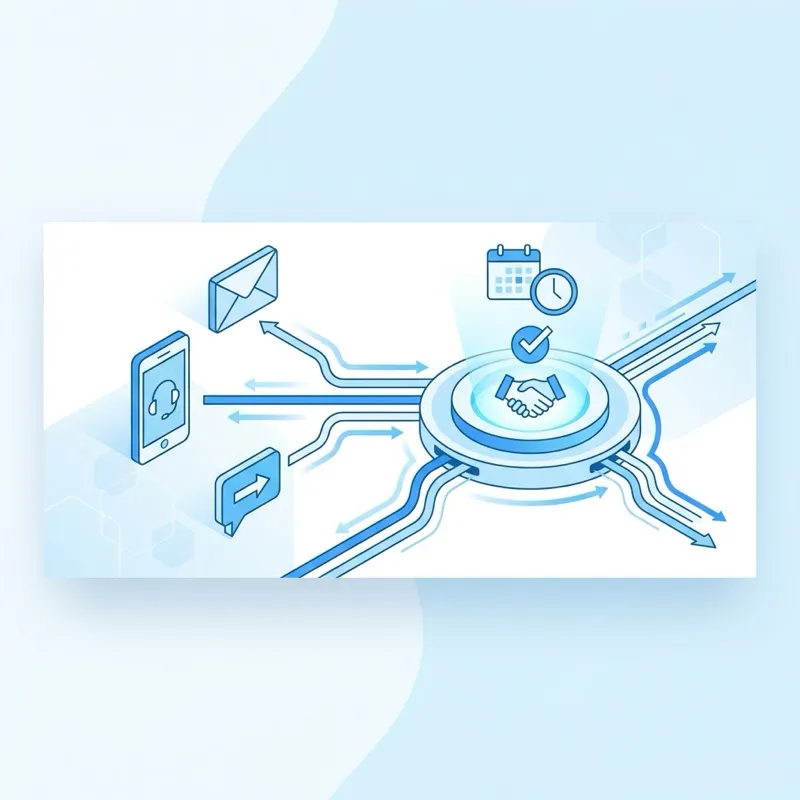
Our team launches the coordinated outreach across phone, email, and LinkedIn. Phone creates conversations, email supports warm-up and follow-up, and LinkedIn adds context and credibility. In simple terms: email warms, LinkedIn validates, and phone converts.
During execution, clients receive reporting and access to a campaign portal showing the activity and movement through the funnel. This can include total dials, connected calls, real conversations, qualified interest, appointments booked, attendance, and the objections or patterns the team is hearing from the market.
When a prospect meets the agreed criteria and wants to learn more, we book the meeting directly on the client’s calendar. We also confirm the meeting and follow up with the prospect to improve attendance and give the sales team a better-prepared handoff.
4. Scale
After the first month or agreed validation period, we review the complete campaign: which segments connected, which messages created conversations, how many qualified appointments were generated, which objections appeared, how meetings progressed, and what the client’s sales team learned.
If the results support continued investment and the client wants to proceed, we scale the audiences, messages, and channels that showed the strongest evidence. ACE prevents scaling based on assumptions: first we analyze, then test the strategy through execution, and only then expand what works.
What makes an appointment qualified?
A booked calendar slot is not automatically a qualified appointment. Before launch, the client and provider should agree on a clear definition that the delivery team can use consistently.
Depending on the offer, qualification may include:
- the company matches the target industry, size, location, or technology profile;
- the contact has the right role or influence over the decision;
- the prospect has a relevant problem, project, priority, or upcoming need;
- the timing is realistic enough to justify a sales conversation;
- the prospect understands why the meeting was booked and has accepted the invitation;
- any agreed disqualifiers have been checked before handoff.
The definition should fit your economics. A high-ticket enterprise offer usually requires more account research, more stakeholders, and a longer sequence than a simpler service sold to small businesses.
What clients receive: a complete outbound system
The value of appointment setting is not simply lower staffing cost or a certain number of calls. BPO Hive delivers a managed system that connects strategy, people, channels, technology, reporting, and sales handoff in one operating process.
The system can include:
- Strategic campaign ownership: ICP analysis, segmentation, offer positioning, message development, objection planning, and an agreed validation plan.
- Omnichannel outreach: coordinated calling, email, and LinkedIn activity instead of disconnected campaigns that cannot learn from one another.
- Trained execution: a managed delivery team supported by campaign leadership, call review, coaching, quality assurance, and ongoing optimization.
- Campaign platform and visibility: a client portal that shows activity and funnel performance, including dials, connections, conversations, appointments, and attendance.
- Qualification and calendar management: prospects are checked against agreed criteria, booked directly, confirmed, and handed to sales with useful context.
- Market intelligence: real objections, buying signals, segment performance, and sales feedback become evidence for the next strategic decision.
Every campaign is scoped around the market, audience, offer, and required touchpoint volume. The purpose of the Validation Sprint is to test the complete system, learn what creates qualified opportunities, and establish the evidence needed to scale confidently.
How to choose a B2B appointment-setting company
Do not choose a provider only because it promises the largest meeting number. Ask questions that reveal whether the company can operate the full system:
- How will you define our ICP? The answer should be more specific than industry and job title.
- Where does the data come from, and how is it validated? Bad data wastes activity and damages deliverability.
- Which channels will you use? Ask how calling, email, and LinkedIn support each other.
- What counts as a qualified appointment? Put the definition in writing before outreach begins.
- How do you manage QA? Look for call reviews, coaching, objection tracking, and message control.
- What will we see in reporting? You should understand contact, conversation, qualification, booking, show, and opportunity performance.
- How will our sales team give feedback? Closed-loop feedback is how appointment quality improves.
- How do you handle US outreach requirements? Campaign timing, opt-outs, data handling, and channel practices should align with applicable rules and your own policies.
Why companies choose BPO Hive for US appointment setting
BPO Hive is built for companies that want a managed outbound engine rather than disconnected lead lists or unmanaged headcount. Our team supports the strategy and the daily execution, from ICP refinement and data through outreach, qualification, booking, reporting, and optimization.
Independent marketplace data currently shows BPO Hive with a 4.9 Clutch rating across 11 reviews, with reviewers highlighting responsiveness, communication, adaptability, and professionalism. Our experience spans SaaS and software, real estate, recruitment, financial services, solar and renewable energy, roofing and HVAC, consulting, and other B2B services.
We are especially well suited to founder-led companies, businesses entering the United States, sales teams that need more first meetings, and high-ticket B2B offers where targeting and qualification matter more than raw lead volume.
Explore our B2B appointment-setting service, see examples in our case studies, or learn how our cold calling, cold email, LinkedIn outreach, and lead research work together.
Frequently asked questions
What is the difference between lead generation and appointment setting?
Lead generation identifies or attracts potential buyers. Appointment setting goes further by contacting them, qualifying interest and fit, and scheduling a meeting with the sales team. A managed program usually connects both functions.
Can BPO Hive target decision-makers anywhere in the USA?
Yes. Campaigns can be segmented by state, metro area, industry, company size, buyer role, technology, and other ICP criteria. The right geography depends on your offer, capacity, and evidence of market fit.
How quickly can an outsourced campaign produce appointments?
Some campaigns create conversations quickly, while complex or enterprise markets need more research and touches. A credible provider should allow time for onboarding, testing, market feedback, and optimization rather than promise a guaranteed number immediately.
Do you use cold calling, email, or LinkedIn?
BPO Hive can use all three as one coordinated motion. The mix depends on where your buyers are reachable, your sales cycle, the quality of available data, and the outreach policies agreed for the campaign.
Is appointment setting a good fit for every B2B company?
No. It works best when the target buyer is clear, the offer solves a meaningful problem, the deal value supports outbound acquisition, and the sales team can follow up and close. If those foundations are unclear, a validation phase should come before scaling.
Build your US pipeline with a managed outbound team
Tell us who you want to reach and what a qualified opportunity looks like. BPO Hive will help you design, test, and execute the campaign.
Fill My Calendar